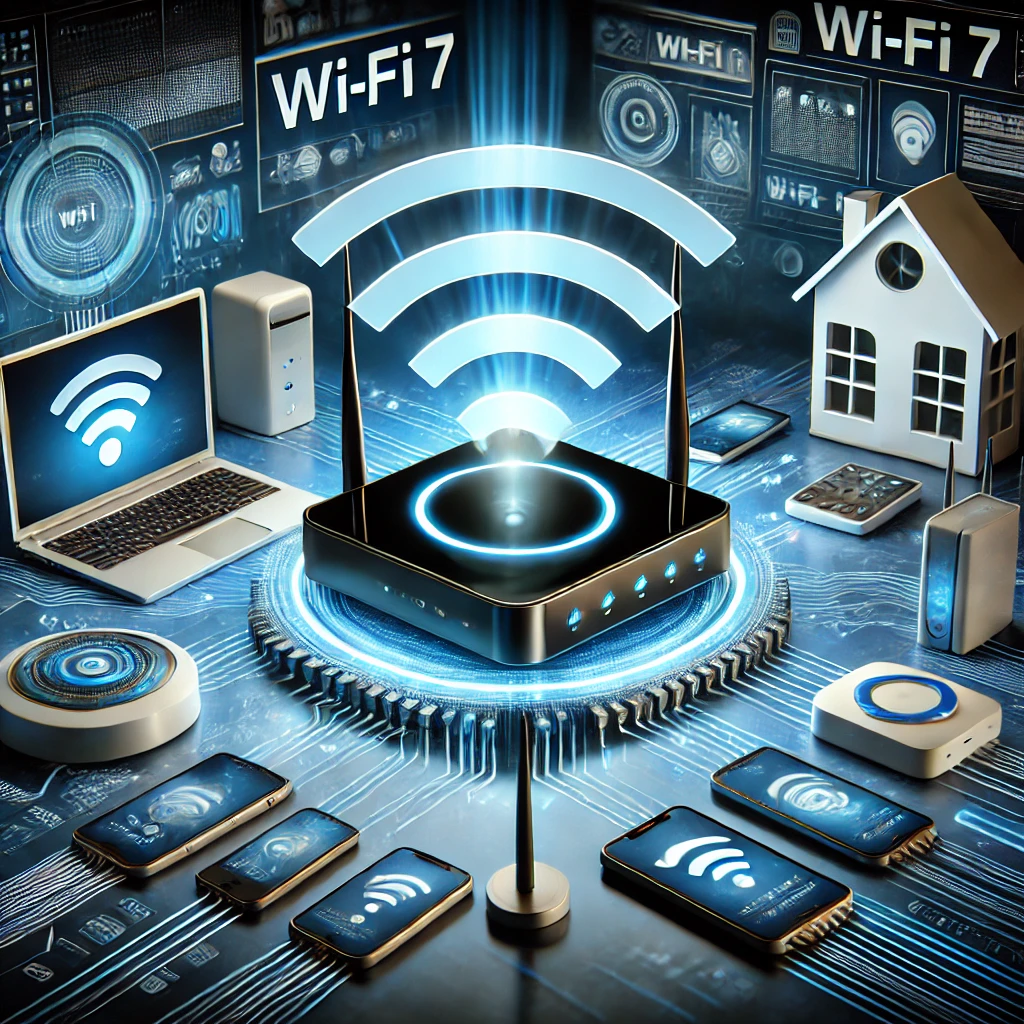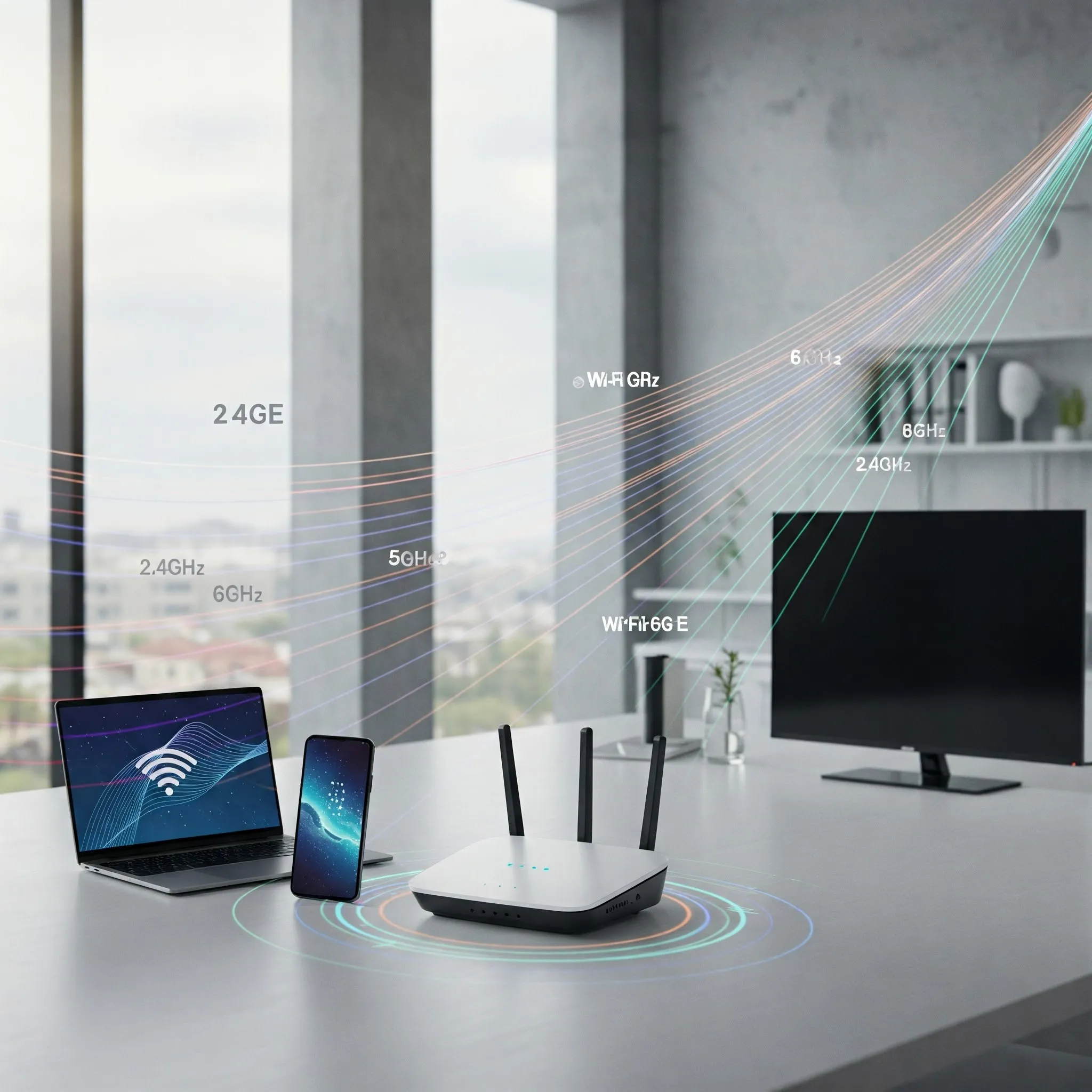
Wi-Fi has become an essential part of our daily lives, connecting everything from smartphones and laptops to smart home devices. But as our reliance on wireless connectivity grows, so does the need for faster, more reliable Wi-Fi. Enter Wi-Fi 6E, the mid-version upgrade to Wi-Fi 6 (which we covered in a previous article). Does it bring so much that it is worth an upgrade? Or should you rather upgrade to the latest and greatest Wi-Fi 7? It depends on which version Wi-Fi your current home network supports and what your devices can manage. Let's dive in, but first, a recap on what Wi-Fi technology is.
How Does Wi-Fi Work?
Before diving into Wi-Fi 6E, let’s start with the basics: how Wi-Fi works. Wi-Fi is a wireless technology that allows devices to connect to the internet and communicate with each other without physical cables. Here’s a simplified explanation:
- Your Router: The router is the heart of your Wi-Fi network. It takes the internet signal from your modem and broadcasts it wirelessly as radio waves.
- Frequency Bands: Wi-Fi signals travel over specific frequency bands, primarily 2.4 GHz and 5 GHz. These bands are like highways for data, with 2.4 GHz offering better range but slower speeds, and 5 GHz providing faster speeds but shorter range.
- Devices Connect: Your devices (like phones, laptops, and smart TVs) have Wi-Fi adapters that pick up these signals, allowing them to connect to the internet.
Wi-Fi standards (like Wi-Fi 5, Wi-Fi 6, and now Wi-Fi 6E) define how efficiently data is transmitted over these bands. Each new generation of Wi-Fi improves speed, capacity, and reliability.
What Is Wi-Fi 6E?
Wi-Fi 6E is an extension of Wi-Fi 6, the previous generation of Wi-Fi technology. The "E" stands for Extended, and it refers to the addition of a new frequency band: 6 GHz.
Key Features of Wi-Fi 6E:
- 6 GHz Band: Wi-Fi 6E introduces access to the 6 GHz frequency band, which is less crowded than the 2.4 GHz and 5 GHz bands. It can offer cleaner channels and more capacity, particularly in crowded environments, but speed and latency still depend on signal, client capabilities and load.
- More Channels: Where local regulations permit the full allocation, the 6 GHz band provides up to 1,200 MHz of additional spectrum, creating more channels for devices to use. This reduces congestion and improves performance.
- Wi-Fi 6 Benefits: Wi-Fi 6E retains all the improvements of Wi-Fi 6, including:
- OFDMA (Orthogonal Frequency Division Multiple Access): Allows multiple devices to share a channel efficiently.
- MU-MIMO (Multi-User, Multiple Input, Multiple Output): Enables the router to communicate with multiple devices simultaneously.
- Target Wake Time (TWT): Reduces power consumption for connected devices, improving battery life.
Wi-Fi 6E vs. Wi-Fi 6: What’s New?
The main difference between Wi-Fi 6E and Wi-Fi 6 is the addition of the 6 GHz band. While Wi-Fi 6 operates on the 2.4 GHz and 5 GHz bands, Wi-Fi 6E unlocks the 6 GHz band, offering:
- Faster Speeds: Both Wi-Fi 6 and 6E can support 160 MHz channels. The benefit of 6 GHz is additional room for wide channels, where permitted, rather than a higher 802.11ax modulation limit.
- Lower Latency: Reduced interference means smoother streaming, gaming, and video calls.
- More Capacity: The extra spectrum allows more devices to connect without slowing down the network.
Client Compatibility and Backwards Compatibility
One important consideration with Wi-Fi 6E is client compatibility. To take full advantage of the 6 GHz band, your devices (like smartphones, laptops, and tablets) must support Wi-Fi 6E. Older devices that only support Wi-Fi 5 or Wi-Fi 6 won’t be able to use the 6 GHz band.
However, Wi-Fi 6E routers are backwards compatible. This means they still support devices using the 2.4 GHz and 5 GHz bands. So, even if you don’t have Wi-Fi 6E-compatible devices yet, upgrading your router now can future-proof your network.
Should You Upgrade to Wi-Fi 6E?
Deciding whether to upgrade to Wi-Fi 6E depends on your needs and budget. Here are some factors to consider:
- Do You Have Wi-Fi 6E Devices?: If you own or plan to buy devices that support Wi-Fi 6E, upgrading makes sense to unlock the full potential of the 6 GHz band.
- Network Congestion: If you live in a densely populated area with many Wi-Fi networks, the 6 GHz band can significantly reduce interference.
- Future-Proofing: Wi-Fi 6E is a long-term investment. Even if you don’t have compatible devices now, you’ll be ready for them in the future. However, if the price leap between Wi-Fi 6E and Wi-Fi 7 is not that much, rather upgrade to Wi-Fi 7.
The leap to Wi-Fi 7
Wi-Fi 7 is the next big leap in wireless technology. It builds on Wi-Fi 6E and offers:
- Multi-Link Operation (MLO) – Supported Wi-Fi 7 clients and access points can use multiple links. The bands and simultaneous-transmission behavior depend on their implementation. (Read more about MLO - the greatest feature in Wi-Fi to date)
- Higher Data Rates – Wi-Fi 7 can use 320 MHz channels in 6 GHz where the country, access point and client permit them; not every Wi-Fi 7 device supports that width or band.
- Better Interference Management – Advanced technology like Adaptive Preamble Puncturing helps avoid congestion.
Wi-Fi 7 products are available. Compare the exact local prices, ports, radio bands, client compatibility and features of the models you can buy. If the price difference is small and the Wi-Fi 7 model supplies the coverage and features you need, upgrading straight to Wi-Fi 7 is a sensible choice. Compatible Wi-Fi 6 and 6E clients can continue using the bands and security modes their radios support.
Conclusion
Wi-Fi 6E is a significant upgrade over Wi-Fi 6, offering faster speeds, lower latency, and more capacity thanks to the new 6 GHz band. While client compatibility is a consideration, Wi-Fi 6E routers are backwards compatible, making them a solid choice for future-proofing your home network.
However, with Wi-Fi 7 products available, it’s worth weighing your options. If you need a faster, more reliable network now and have Wi-Fi 6E-compatible devices, upgrading to Wi-Fi 6E is a great choice. If you want the newer feature set, compare available Wi-Fi 7 models now; a small price difference can make that the better long-term choice for your needs.
Ultimately, the decision depends on your specific needs, budget, and how quickly you want to embrace the next generation of Wi-Fi technology. Whatever you choose, the future of wireless connectivity is looking faster and more reliable than ever!
Spectrum Depends on the Country
The US full 6 GHz allocation permits up to 59 non-overlapping 20 MHz channels, fourteen 80 MHz channels or seven 160 MHz channels. These counts are not a worldwide entitlement. Countries can permit a smaller part of the band, different power classes or different indoor/outdoor uses. The UK initially opened the lower band and has subsequently developed expanded access arrangements; check current regulator and device rules rather than copying a regional channel plan.
Use equipment approved for your country and keep its regulatory settings correct. A foreign-market router may lack local support or permitted channels. Wider channels use more spectrum and require compatible clients; a nominally faster width can perform worse when signal or interference is unfavorable.
Security, Discovery and Power Classes
Certified 6 GHz operation uses WPA3 or Enhanced Open/OWE with Protected Management Frames, rather than ordinary WPA2 or an unencrypted open network. OWE encrypts the wireless link without authenticating the hotspot's identity. WPA3-Personal improves password-authentication resistance; neither option makes phishing, malicious endpoints or compromised firmware impossible.
Reduced Neighbor Reports can advertise 6 GHz networks through an access point's other bands. Preferred Scanning Channels give compatible clients a smaller set of discovery channels. This helps discovery efficiency but does not promise instantaneous association, especially when software, security settings or regional support differ.
Low-power indoor and standard-power operation are regulatory categories. Where standard-power equipment requires automated frequency coordination, it must use an approved AFC arrangement to protect incumbent services. A power-class label does not mean radio signals stop at your walls or that every home router can turn on a large universal power increase.
Check the Whole Path Before Buying
Keep the recommendation grounded in the clients you use. Confirm their 6 GHz radio, operating-system, driver and regional support, then compare the access point's Ethernet ports and mesh backhaul. Older clients use compatible 2.4 or 5 GHz networks; buying a 6E router does not add a 6 GHz radio to them.
For a mesh, a 6 GHz radio may serve backhaul, clients or both depending on the system. A satellite with a weak backhaul can limit a strong nearby client connection. Ethernet backhaul can remove that wireless bottleneck, provided the system's wiring topology supports it.
Test in the rooms that matter: near the main access point, behind the walls where you work and beside each mesh node. Compare a local transfer to a wired server with an internet speed test so the ISP does not hide a Wi-Fi difference. Record the connected band and width, repeat the same transfer and check latency during competing traffic. Link rate is a radio negotiation figure, not the amount of usable file-transfer throughput.
Wi-Fi 6E can be a good upgrade when cleaner spectrum addresses a real problem and you have suitable clients. If a similarly priced Wi-Fi 7 system supplies the features, ports and coverage you need, moving straight to it remains a sensible choice. Verify the actual model: some Wi-Fi 7 products are dual-band and cannot provide 6 GHz or 320 MHz benefits. Better placement or wired backhaul can be more useful than replacing an otherwise adequate router.