Monitors are our windows to the digital world, but have you ever wondered what goes on behind the scenes to create that sharp image? This guide explains IPS panels, their strengths and the specifications that matter when choosing a monitor.
How it Works: Liquid Crystals to Living Pixels
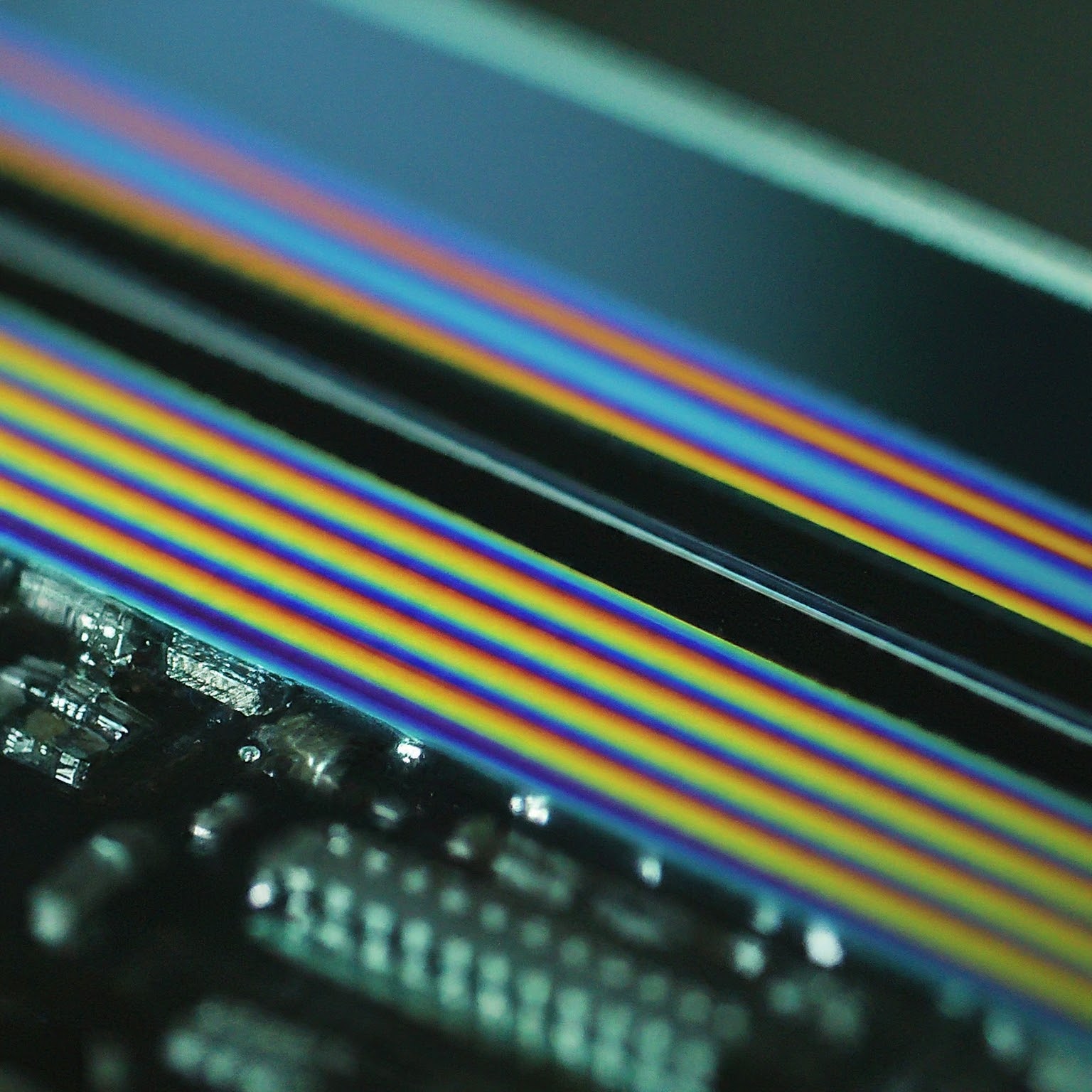
IPS stands for In-Plane Switching, a type of liquid-crystal display. A backlight supplies the light; liquid crystals, polarizers and color filters control how much reaches each subpixel. An electrical field changes the liquid-crystal orientation mainly within the plane of the display. That design helps colors remain more consistent when viewed off-center than in many conventional TN panels.
The crystals do not generate light themselves. This distinction matters when comparing IPS with OLED, whose pixels emit their own light. IPS is also a panel technology, not a complete specification: the backlight, coating, electronics and factory tuning affect the finished monitor.
The Good, the Bad, and the IPS for You
IPS Pros:
- Color Champion: IPS is a strong option for consistent color viewing, which explains its appeal for creative work. However, gamut and accuracy depend on the particular monitor. A wide-gamut display can reproduce more colors without necessarily reproducing the intended colors accurately. This makes them ideal for tasks like photo editing, graphic design, or video editing where precise colors are crucial. Even for casual users who enjoy watching movies or browsing the web, the richer colors provided by IPS panels can enhance the overall viewing experience.
- Wide Viewing Angles: Unlike some other panels where the colors and contrast shift dramatically when viewed off-center, IPS panels offer exceptional viewing angles. Colors usually change less as you move off-center, although extreme angles can still affect brightness, contrast and the appearance of dark areas. This is a major advantage for activities like watching movies with friends or sharing your work on your computer screen with colleagues.
- Fast Response Times: Gone are the days of sluggish IPS panels! Modern IPS panels boast impressive response times, minimizing blur and ghosting effects during fast-paced activities like gaming. Compare the actual model's pixel transitions, refresh rate and overdrive behavior. A panel-family label alone cannot establish which monitor is faster or whether motion artifacts will be noticeable.
IPS Cons (What to Watch Out For):
- Native contrast: Many conventional IPS monitors have relatively modest black-to-white contrast. Some VA panels offer deeper native blacks, while OLED panels can turn individual pixels off. Contrast varies by model and measurement conditions; a dynamic contrast figure is not interchangeable with native contrast.
- IPS glow: Dark scenes can show an angle-dependent sheen, often near the corners. Viewing distance, angle, brightness and ambient lighting affect its visibility. Lighting changes can reduce the perceived effect but do not remove the panel characteristic.
- Model and price variation: High-refresh, calibrated or locally dimmed IPS monitors can cost more than basic models. Compare current local prices and features rather than assigning every IPS monitor a fixed premium over TN or VA.
Use Cases: When IPS Shines
If you prioritize color accuracy, wide viewing angles, and a great all-around experience, then an IPS monitor is the way to go. Here are some specific examples:
- Creative Professionals: Photo editors, graphic designers, web designers, and anyone working with color-critical tasks will appreciate the accurate color reproduction of IPS panels. Choose a model with the required gamut, useful factory calibration information and suitable uniformity. A calibrated display and a color-managed application are part of achieving a consistent result; IPS alone does not guarantee a match to a print or another screen.
- Gamers: Gamers seeking a smooth and responsive display with excellent color won't be disappointed with IPS. Different IPS, TN, VA and OLED models make different tradeoffs. Check response behavior at the refresh rates you actually use, including variable-refresh operation. IPS panels offer a fantastic combination of speed, color accuracy, and viewing angles, making them a great choice for gamers who enjoy a variety of genres, from fast-paced shooters to immersive RPGs.
- General Office Use: For everyday tasks like browsing, working on documents, or watching videos, IPS panels provide a clear and enjoyable viewing experience. The wide viewing angles are particularly beneficial in office settings where multiple people may be looking at the screen from different angles. Additionally, the color accuracy of IPS panels can be helpful for tasks like editing photos or creating presentations.
- Home Entertainment: IPS monitors are a great choice for home entertainment use. Whether you're streaming movies and shows, watching sports, or playing games, IPS panels deliver stunning visuals with vivid colors and wide viewing angles. IPS panels are also a good option for users who plan to use their monitor for both work and entertainment, as they excel in both areas.
Beyond IPS: Choosing the Right Monitor
While IPS is a great choice for many users, it's not the only option. Here are some additional factors to consider when selecting a monitor:
- Resolution: This refers to the number of pixels displayed, impacting sharpness. Higher resolutions can increase detail at the same screen size. Basic desktop use does not require a powerful gaming GPU, but rendering demanding games at higher resolution and frame rates can.
- Refresh Rate: Measured in Hertz (Hz), the refresh rate determines how often the image on the screen updates. Higher refresh rates (like 144Hz or 240Hz) are ideal for gamers seeking a smoother experience.
- Screen Size: Consider your workspace and viewing distance. A larger screen can be immersive but may require more space.
Monitors Matter: Your Window to the Digital World
A good monitor can significantly enhance your computing experience. By understanding panel technologies like IPS, you can make an informed decision and choose the best monitor for your needs. After all, a good monitor is like a good window – it provides a clear view of the digital world you interact with every day.
Understand IPS Variants Without Treating Them as Guarantees
Terms such as Fast IPS, Rapid IPS and Nano IPS describe particular implementations or product families. They are not universal grades with one guaranteed response time, gamut or contrast ratio. Check the complete monitor specification and its test conditions. A gaming-oriented IPS monitor and a professional graphics IPS monitor may prioritize very different results.
Nano IPS branding is associated with wide-gamut backlight technology, but a large advertised gamut does not establish accurate sRGB reproduction. IPS Black focuses on improving black levels. For a concrete current example, LG Display specifies 3,000:1 contrast for its 32-inch IPS Black 2.0 panel. That is a manufacturer specification for a particular panel, not a promise that every monitor carrying an IPS Black label matches it.
Mini-LED describes a backlight arrangement rather than a replacement for IPS liquid crystals. Local dimming can lower the brightness behind dark areas, but the number and behavior of dimming zones matter. A bright object beside a dark background can reveal blooming. Conversely, a basic HDR-compatible IPS monitor may accept an HDR signal without having the dimming or brightness needed for a convincing HDR image.
Separate Gamut, Accuracy and Calibration
A gamut coverage figure describes which colors a display can reproduce within a target space. It does not say how accurately it reproduces them. Likewise, a gamut area or volume exceeding 100% sRGB does not mean complete sRGB coverage or a fixed conversion to DCI-P3 coverage. EIZO's color-gamut guide specifically explains that these measurements answer different questions.
For everyday sRGB content, a suitable sRGB mode can help prevent exaggerated saturation on a wide-gamut screen. Check whether that mode allows the brightness adjustments you need. On supported Windows displays, automatic color management is another available option; its presence depends on the system and display configuration. Neither selecting a preset nor switching on an operating-system setting proves a Delta E below two.
For color-critical work, use the correct profile for the actual display and mode, a measurement device where appropriate, and a color-managed application. Match the brightness and white point to the workflow instead of copying someone else's settings. A profile taken from another unit cannot prove that your unit has the same calibration or uniformity.
Check Motion and Dark-Scene Behavior
Refresh rate measures how often the screen can update. Pixel response time measures how quickly pixels change, while input lag concerns delay before a visible response. A quoted one-millisecond gray-to-gray transition does not describe every transition or the whole input path. Strong overdrive can make transitions faster while introducing overshoot, visible as bright or dark trails around moving objects.
Use a sensible brightness in your normal room, then examine dark content from your usual seating position. IPS glow changes with viewing angle and distance; backlight leakage tends to remain in the same place. Dell's support guide distinguishes the two, and BenQ recommends adjusting ambient light, brightness, angle and distance to make glow less noticeable. Persistent distracting leakage should be judged against the manufacturer's support and return policy rather than assumed to be removable by bias lighting.
Finally, confirm that your computer, cable and selected input support the monitor's intended resolution and refresh rate. Check text scaling, stand adjustment, reflections and connectivity alongside picture specifications. These practical checks support the original view that IPS can be an excellent all-round choice while helping you select a particular monitor for the work you actually do.