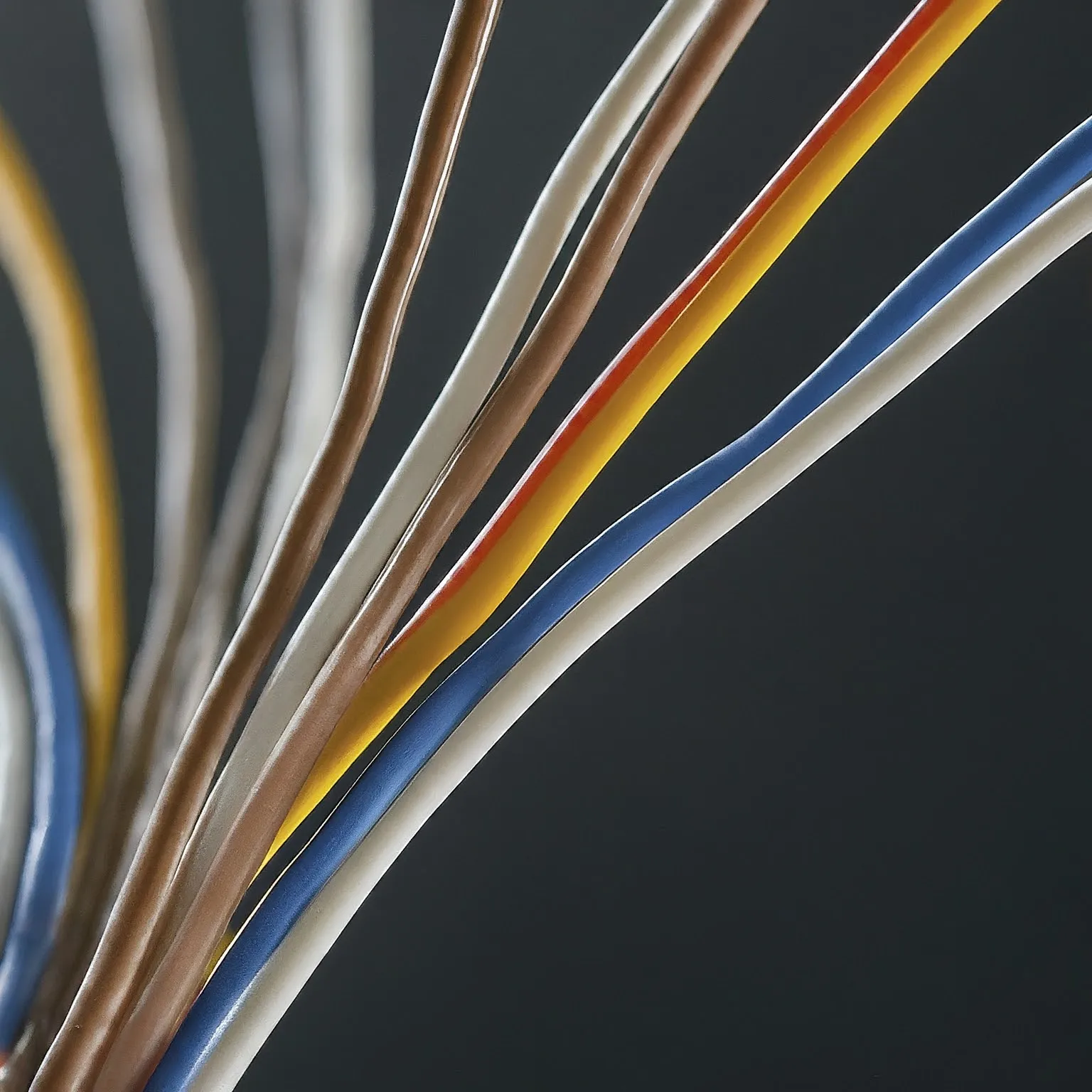
Network cables carry the electrical signals between your computer, switch, router and other devices. Choosing them involves two separate questions: what the conductor is made of and how it is constructed. Solid and stranded describe construction; copper and copper-clad aluminum (CCA) describe material. A solid conductor is not automatically pure copper.
The distinction matters for fixed building wiring, flexible patch cords and Power over Ethernet. A cable that appears to work for a short data connection has not necessarily demonstrated standards compliance or suitability for a powered device.
Network Cables: The Inside Story
Common four-pair Ethernet cable contains eight insulated conductors arranged as twisted pairs. Pair geometry, insulation, connectors and electrical characteristics all affect performance. The conductor material is one part of that complete channel; changing the metal does not by itself guarantee lower gaming latency or a faster internet connection.
CCA has an aluminum core with a copper outer layer. It can resemble copper from the outside, while behaving differently in DC resistance and mechanical properties. Fluke's cabling guidance identifies CCA products marketed as compliant category cable as a problem, particularly when PoE adds current through the same conductors.
Solid Core vs. CCA: A Battle of Conductors
Keep material and construction separate when reading a product description:
- Solid copper: Each conductor is one continuous copper wire. This is commonly used in permanent horizontal wiring, where the cable is installed once and connected to suitable insulation-displacement terminals.
- Stranded copper: Each conductor consists of several smaller copper strands. It is more flexible and better suited to patch cords that are moved, bent or unplugged regularly. The strand count and gauge vary by product; there is no universal seven-strand construction.
- CCA: Copper cladding covers an aluminum core. The cable may use a solid construction, so seeing the word solid on a listing is insufficient. Ask for the actual conductor material and applicable performance verification.
Solid copper does not become the most flexible option simply because copper is ductile. Fluke distinguishes rigid solid conductors from more flexible stranded construction. Match the connector to the conductor type, diameter, insulation and cable category; a plug or jack designed for one range may not reliably terminate another.
Choosing Your Champion: Use Cases for Each Cable
- Permanent runs: Copper's performance and reliability are useful considerations when selecting appropriately verified solid-copper installation cable. Also check the cable's jacket, route, bend radius and termination hardware. A cable category alone does not establish outdoor or building-installation suitability.
- Equipment patching: Suitable stranded-copper cords are practical behind desks and in racks where movement is expected. They still have electrical and length limits, especially under higher PoE loads; flexibility is not a substitute for the correct specification.
- CCA and simple connections: CCA can appear to work in some short data-only situations, which explains its budget appeal. That does not make it standards-compliant category cabling, establish a safe universal length, or qualify it for PoE and permanent installation. A successful printer connection or internet test is a much narrower observation.
Solid Core vs. CCA: A Side-by-Side Comparison
| Question | Solid copper | Stranded copper | CCA |
|---|---|---|---|
| Material | Copper | Copper | Copper-covered aluminum |
| Construction | One wire per conductor | Multiple strands per conductor | Check the actual product |
| Typical role | Fixed horizontal wiring | Flexible equipment cords | Not equivalent to standards-compliant category copper cable |
| PoE assessment | Verify gauge, rating, length, temperature and termination | Also account for cord construction and resistance | Higher resistance and compliance concerns; do not substitute for a specified PoE channel |
| What it does not prove | Automatic certification or zero risk | Unlimited flexibility, length or power capability | Compliance merely because a short data link works |
The Final Verdict
By understanding conductor material and construction, you can choose for your actual needs. Copper remains the preferred basis for a properly specified network channel. On a tight budget with simple networking needs, CCA might suffice for an individual data connection, but that limited observation is not a standards or PoE recommendation. Account for the work involved in replacing a failed cable, especially if it will be hidden inside a building.
A well-chosen cable supports a smooth flow of data when the rest of the channel is suitable. Use solid copper where the installation calls for it and flexible stranded copper where movement calls for it, then verify the installed connection rather than relying on the material name alone.
Resistance, PoE and What a Copper Label Does Not Guarantee
PoE sends power over network conductors, so DC resistance affects voltage drop and heat. Fluke quotes solid aluminum at about 55% higher resistance than copper of the same diameter. That comparison is not a universal measured percentage for every CCA product: copper-layer thickness, conductor size, length and temperature matter.
Resistance imbalance also matters because current should be distributed appropriately across conductors and pairs. Poor termination or inconsistent construction can create problems even in an otherwise copper cable. The relevant measurements are not captured by a basic internet speed test.
Likewise, pure copper is not automatically 100% safe for every PoE/PoE+/PoE++ installation. Current, bundle size, ambient temperature, gauge, connector rating and channel design still need to fit the application. Do not substitute a general material claim for the powered device's and cabling system's requirements.
CCA is a material description, not automatically a counterfeit label. The problem is selling a product as meeting category or safety requirements that it does not meet. Avoid broad claims that a particular material is legally prohibited in every country or every industry; check the actual specification and local installation requirements.
Four Useful Checks Before Buying or Installing
- Read the exact specification. Look for conductor material, solid/stranded construction, gauge, category and the intended application. OFC marketing, a gold-colored plug or a solid-core label is not a complete specification.
- Verify the manufacturer and part number. Match the supplier's listing to the manufacturer's data sheet and retain the purchase information. Check claimed certification in the certifier's directory where available; a printed logo alone can be misleading.
- Separate safety and transmission claims. UL's guide distinguishes safety certification from transmission-performance verification. A jacket or packaging mark should be interpreted in its actual scope, rather than treated as proof of every category and PoE requirement.
- Test the intended channel. Basic wire mapping identifies some connection errors, while appropriate certification can measure transmission performance and relevant resistance parameters. Specify the correct test for the application instead of declaring a cable genuine from one visual clue.
Weight varies with conductor size, insulation, shielding, jacket, packaging and length. A fixed box-weight range cannot prove copper content, and counterfeit packaging may include ballast. Destructive scraping can provide a clue on a spare sample, but it does not certify transmission or jacket performance. Open-flame melting tests offer no reliable complete assessment and should not be used as a home cable-verification procedure.
Troubleshoot the Complete Channel
If an existing connection is unreliable, check negotiated speed, port errors, damaged cords and terminations. A short known-good replacement cord helps isolate equipment from a longer installed channel. Compare local transfers with internet tests so that ISP or storage limitations are not mistaken for a conductor problem.
For installed or PoE cabling, document the route, length, connectors and relevant test results. If you cannot establish that the channel meets its intended requirements, arrange proper assessment before relying on it for a powered device. The useful distinction is a verified channel suited to the job, not an assumed gaming advantage from one conductor label.