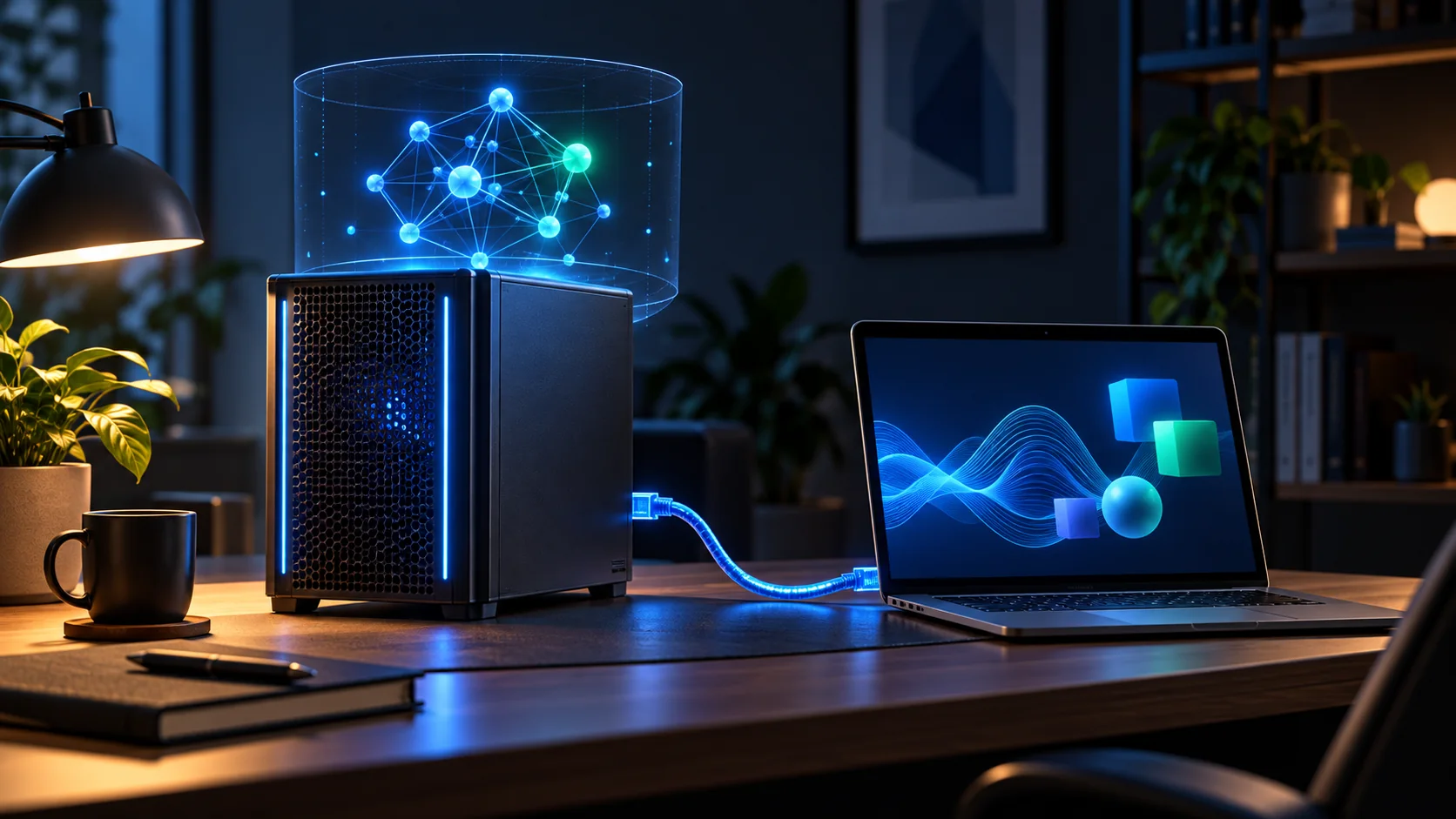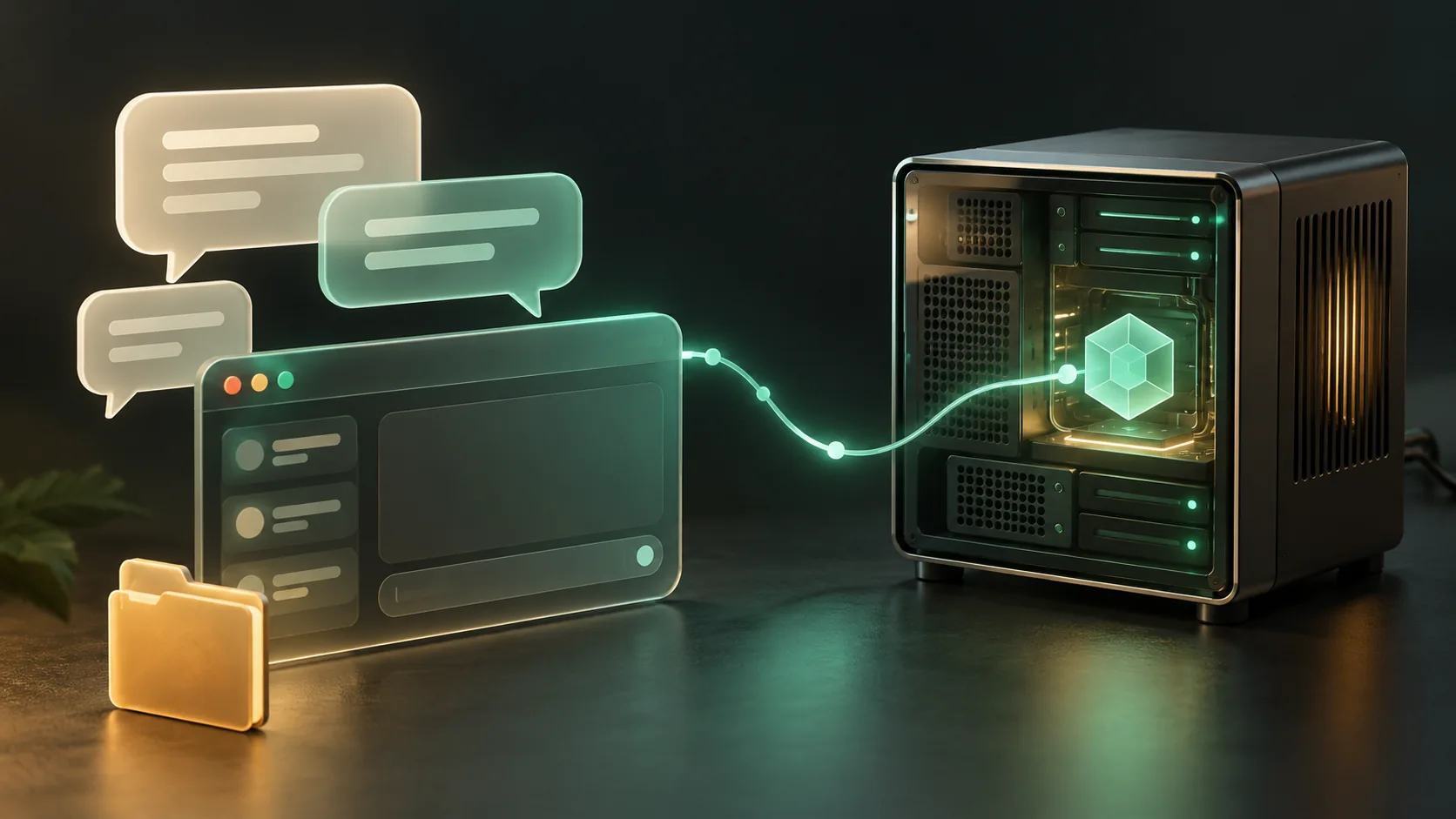
DeepSeek's Janus-Pro is a powerful and interesting multimodal research model: it can work with image-and-text questions and generate images from text. Public code and downloadable weights make it appealing for experimentation, with hardware and licensing details worth checking before you begin.
Janus-Pro was announced in January 2025. It is a separate model project from the DeepSeek chatbot, so a feature available in that hosted chat service should not be assumed to exist in the Janus demo.
What Is Janus?
Janus is a family of models for multimodal understanding and generation. “Understanding” here means producing a textual answer from image-and-text input: describing a scene, answering a visual question or discussing a diagram. “Generation” means producing an image from a text prompt.
These tasks need different representations of an image. Janus separates their visual encoding pathways while using a shared autoregressive transformer. That separation was already part of the original Janus design; it was not first invented for Janus-Pro.
The outputs can be useful in creative or educational experiments, but they do not demonstrate human perception or guarantee correct interpretation. Treat a scene description as a model's answer to verify against the visible image, especially when text or small details matter.
What Janus-Pro Improves
The researchers describe three main changes from Janus: an optimized training strategy, expanded training data and scaling to a larger language-model backbone. They report improvements in multimodal understanding and text-to-image instruction following, as well as more stable visual generation in their evaluations.
That makes Janus-Pro an impressive research development. It does not establish that every response is more accurate, every task runs faster or every generated image is better than an alternative. Training convergence, benchmark scores and inference speed are different measurements.
Janus and Janus-Pro Compared
| Aspect | Janus | Janus-Pro |
|---|---|---|
| Core approach | Separate visual encodings with a shared transformer | Retains that core approach |
| Public checkpoints | Janus-1.3B in the repository's download list | Janus-Pro-1B and Janus-Pro-7B |
| Training | Earlier training strategy and data mix | Revised strategy, additional data and larger-model experiments |
| Performance evidence | Reported research evaluations | Reported improvements on selected understanding/generation evaluations |
| Your deployment | Depends on checkpoint, precision, software, hardware and actual workload | |
The checkpoint names are labels rather than an exact count of all parameters. The technical report describes the smaller Pro language backbone at roughly 1.5 billion parameters and the larger one at 7 billion. Additional vision and generation components also contribute to the complete model.
The Two Visual Pathways
The model card identifies SigLIP-L as the understanding encoder, using 384×384 image input. The generation pathway uses a VQ image tokenizer with a downsampling factor of 16. The transformer predicts discrete image tokens, which the generation system decodes into an image; this is different from treating the project as a conventional standalone diffusion pipeline.
Resolution matters. The paper identifies limits for fine-grained understanding such as OCR and for small visual details in generated images. Enlarging a finished image does not recover information the model never produced. Check important labels, object counts and chart details against the original rather than assuming a fluent answer means accurate reading.
Training Data and Licensing
Training data, reuse permissions and generated-image rights remain sensible questions for any public model. The technical report discusses the categories and expansion of its training data, including synthetic generation data. That description is useful research evidence, but is not proof that every dataset or possible output carries the same reuse permission.
The code repository has an MIT code license and a separate DeepSeek model agreement. The current Janus-Pro model-card metadata labels the models MIT, while the card's license section links to the DeepSeek Model License. Those statements are inconsistent enough that you should check the terms for the exact checkpoint/revision and seek publisher clarification if your use depends on them.
Do not assume the software license automatically licenses the weights, training data or everything depicted in an output. Public availability is valuable for research, but is different from an unconditional “anyone can use everything for any purpose” promise. Evaluate the relevant permissions for your project without treating general industry concerns as a proven Janus-Pro-specific violation.
Get Useful Results
- Choose the right task. Image Q&A and text-to-image generation use different demo controls.
- Provide readable input. A tiny label in a full-page screenshot may be difficult for the model to interpret.
- Give specific instructions. State the output format and which visible details matter.
- Separate observation from invention. A fictional backstory is a creative task, not evidence about what actually happened.
- Check results. Compare answers or generated images with the requirements you supplied.
Prompt Examples
Text and Generation
For an illustrative text-to-image test, try: “A red mug to the left of a blue book on a plain wooden desk, viewed from above.” Then check the number, colors and relative positions. Add style or lighting details only after establishing that the main objects are correct.
A request to summarize current AI news needs current source text or an external retrieval workflow. The basic Janus demo is not automatically a live-news search service. If you provide a passage to summarize, verify that the answer stays within that passage.
Image Understanding
Try “Describe the visible objects and their positions in this image” or “Transcribe the readable heading; say if any characters are unclear.” These give you concrete details to check. A description of someone's facial expression should not be treated as reliable knowledge of what that person feels.
Image and Context
For a chart, supply its meaning and ask for visible trends, then verify the values yourself. If the resolution makes labels unreadable, a more detailed source or dedicated document tool may be needed. Clear wording helps, but cannot recover detail that the image-processing path loses.
Run the Research Demo Locally
The official repository supplies the demo, and Janus-Pro-7B on Hugging Face supplies the checkpoint. Use a dedicated Python environment and a compatible PyTorch build for your operating system and GPU. The repository declares Python 3.8 or newer, but older pinned demo dependencies still need compatibility checks with your chosen environment.
git clone https://github.com/deepseek-ai/Janus.git
cd Janus
python -m venv .venv
source .venv/bin/activate
python -m pip install -e '.[gradio]'
git rev-parse HEAD
These shell activation instructions are for a Unix-like environment. Record the repository revision and package versions when a setup works. The demo loads the 7B checkpoint by default and uses custom model code via trust_remote_code=True; inspect the code you choose to run. Switching its model path to the published 1B checkpoint can reduce resource demands, but does not prove compatibility with every backend.
In the current upstream demo, the active final line is demo.launch(share=True), which requests a public Gradio share link. For a private desktop experiment, replace that line with:
demo.launch(share=False, server_name="127.0.0.1")Then launch it from the repository folder and open the local URL printed in the terminal:
python demo/app_januspro.pyDo not treat 16–24GB of GPU memory as a universal guarantee. Roughly 7 billion language weights at two bytes each already represent about 14GB before other model components and runtime memory. Batch size, generated tokens and precision affect the requirement. The demo uses bfloat16 on its CUDA path; its CPU fallback is not proof that every CPU operation works or performs well. Start small and inspect actual errors and memory use.
Choose Alternatives by Capability
OpenAI vision-enabled models, Gemini, Claude and Mistral's documented vision models offer image-input capabilities. LLaVA is another public vision-language project to explore. “Mixtral with Vision” is not a sufficiently specific model recommendation; check the actual vision-capable model instead.
Image understanding and image generation are separate capabilities. Compare the exact product or checkpoint, input/output formats, current access terms and your own sample tasks. A hosted vision service is not interchangeable with a local unified model merely because both are called multimodal.
A Powerful Project to Explore
Janus-Pro is an impressive option for exploring unified image understanding and generation. Its public research and implementation make it useful for learning and experimentation. Choose a suitable checkpoint, verify the license and local setup, and judge outputs against concrete requirements rather than a universal speed or accuracy promise.